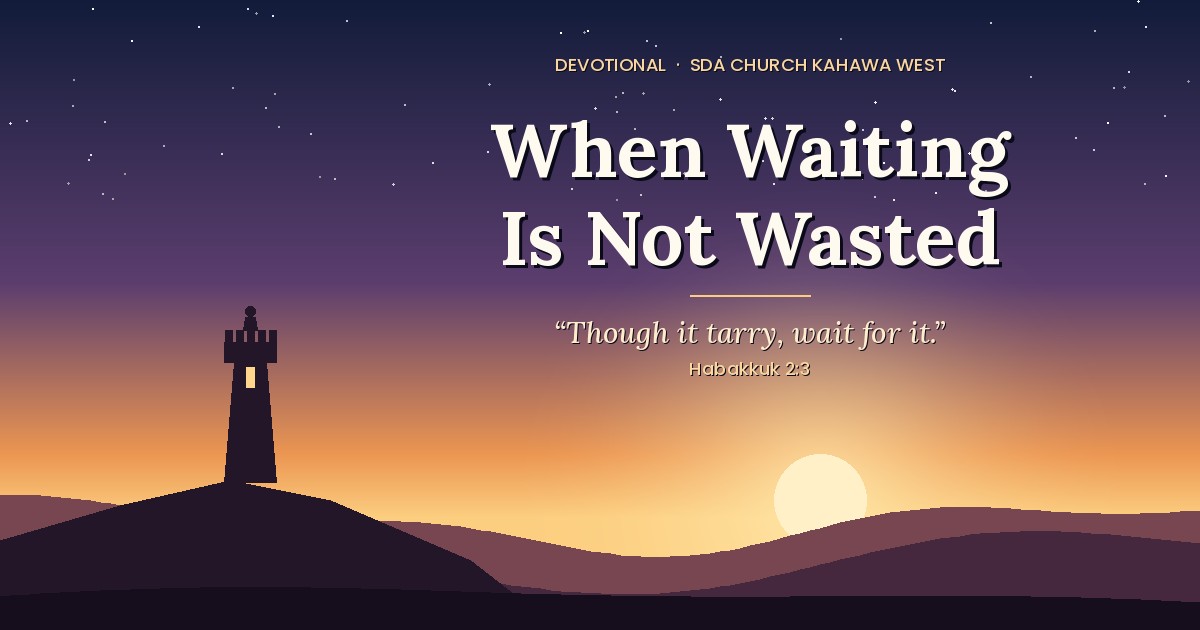
“For the vision is yet for an appointed time, but at the end it shall speak, and not lie: though it tarry, wait for it; because it will surely come, it will not tarry.” — Habakkuk 2:3 (KJV)
Introduction
Nobody likes waiting. We stand in lines, refresh tracking numbers, and check our phones for replies. But the hardest waiting isn’t for packages or appointments. It’s waiting for the healing that hasn’t come, the prayer that hasn’t been answered, the door that hasn’t opened.
If you’re in that season, Habakkuk understands you.
The Man Who Asked “How Long?”
Habakkuk opens his book with a complaint: “O Lord, how long shall I cry, and thou wilt not hear?” (1:2). He saw injustice and violence, and God seemed silent. He wasn’t a man of easy faith. He was honest.
Then, in chapter 2, he says, “I will stand upon my watch… and will watch to see what he will say unto me.” He chose to stay put and keep listening. God answered, and the answer is our verse.
Three Truths About Waiting
1. The promise has an appointed time.
“The vision is yet for an appointed time.” Your waiting is not random. God is not late, forgetful, or distracted. Joseph waited years between his dream and the throne. Abraham and Sarah waited decades for Isaac. Each one was on a schedule they couldn’t see, but God could.
What feels like delay from our side is timing from His. A farmer who digs up the seed to check on it destroys the harvest. Some things must grow in the dark.
2. The promise will speak, and it will not lie.
“At the end it shall speak, and not lie.” People disappoint us, and circumstances change, but God’s word does not expire. Notice that it says at the end it will speak. The end of the wait is not the end of the story. It’s where God’s faithfulness becomes plain.
3. The promise requires us to wait, not wither.
“Though it tarry, wait for it.” God does not pretend the delay won’t happen. He says though it tarry, which admits it may feel slow. But biblical waiting is not passive. It looks like:
- Praying, which keeps the conversation with God open
- Obeying, which means doing the next faithful thing in front of you
- Preparing, which means getting ready for what you’ve asked Him for
- Trusting, which means refusing to let discouragement write the ending
Isaiah 40:31 says that those who wait on the Lord will renew their strength. Waiting is where strength is made.
What the Wait Is Doing in You
The wait is not only about what God will give you. It’s about who you are becoming while you wait. Patience, humility, dependence, and deeper roots are formed in seasons when nothing seems to move. Often God is working on the person while He is working on the promise.
Chapter 2 continues, “The just shall live by his faith” (v. 4). Faith is not proven when everything is going well. It’s proven in the waiting room.
A Word to the Weary
Maybe you’ve prayed the same prayer for years. Maybe you’re tired of hearing “just trust God.” Hear this: God is not offended by your questions. Habakkuk asked “How long?” and God didn’t rebuke him. He gave him a promise.
You may not know how or when, but you can know Who. The One who set the time is the One who holds it.
Conclusion
Your waiting season will not last forever. The promise will come, and it will not be late by God’s clock. Until then, stand on your watch, write down the vision, keep praying, and keep obeying.
Don’t give up in the delay. Wait for it, because it will surely come.